Contact us at Voyage Air – your feedback is important.
We want to know what you’re thinking, and about your travel guitar needs. We especially want to know if you have any questions or problems with your Voyage Air. Let us hear from you and thank you for your input!

Guitar Stands

Guitar stands are not for storing your guitar.

When you own a beautiful instrument, it’s a natural desire to want to display your prize and keep it within easy reach for play. This isn’t the best idea for a number of reasons.

Storing your guitar on a stand makes it susceptible to… everything. The guitar can be knocked over. Things can fall on your guitar. Your cat might mistake your pride-and-joy for a scratching post.

A guitar on a stand is also not protected from temperature and humidity extremes. For utmost protection, you should keep the guitar in its case at any time you are not actually playing the guitar.

If you use a guitar stand to keep your guitar handy, consider it as a place to hold the instrument while you take a break.

Avoid stands with rubber pads.

Over time, the chemistry of the guitar’s finish interacts with the rubber pads. This usually results in an unsightly band or stripe at the contact point. At worst, the rubber can actually eat into the finish of the guitar. Very recent guitar stands have improved synthetic pads that are supposedly safe for the guitar’s finish. If you want to use a stand like this, please double-check with its manufacturer to make sure that the stand won’t harm the finish of your Voyage Air Guitar.

If you choose to keep your guitar on a stand for some period of time, make sure that the guitar is not exposed to direct sunlight. Sunlight can cause uneven heating of the instrument. Long term, it can also prematurely age or damage the finish of the guitar.
Opening and Folding Your Guitar

This video gives an overview for unpacking and folding open a Voyage Air Guitar. It concludes with the steps for folding and packing your Voyage Air Guitar. To find out how you can get your own Voyage Air Guitar, contact us today!

Using the Barrel Wrench

Adjusting the Thumbscrew Grommet

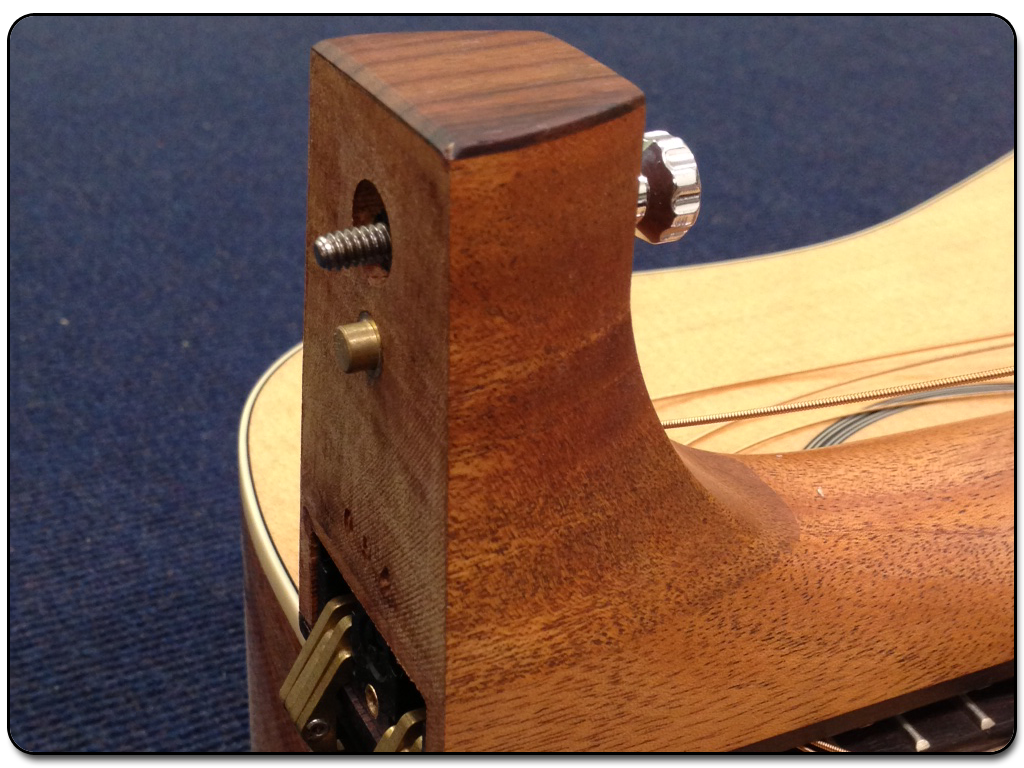
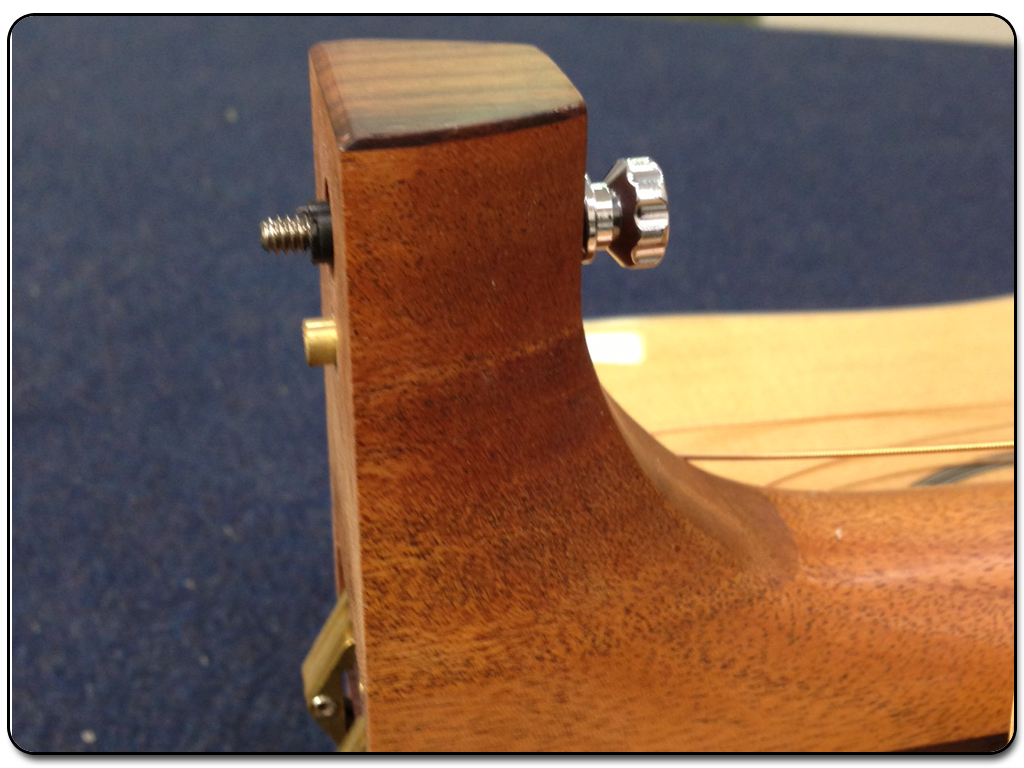
Sometimes, due to movement from travel, the grommet inside the thumbscrew assembly can change position causing the thumbscrew to not function properly. This may be expressed as a small ‘gap’ on the heel of a guitar, and the thumbscrew not being able to be completely screwed in. This is corrected easily.

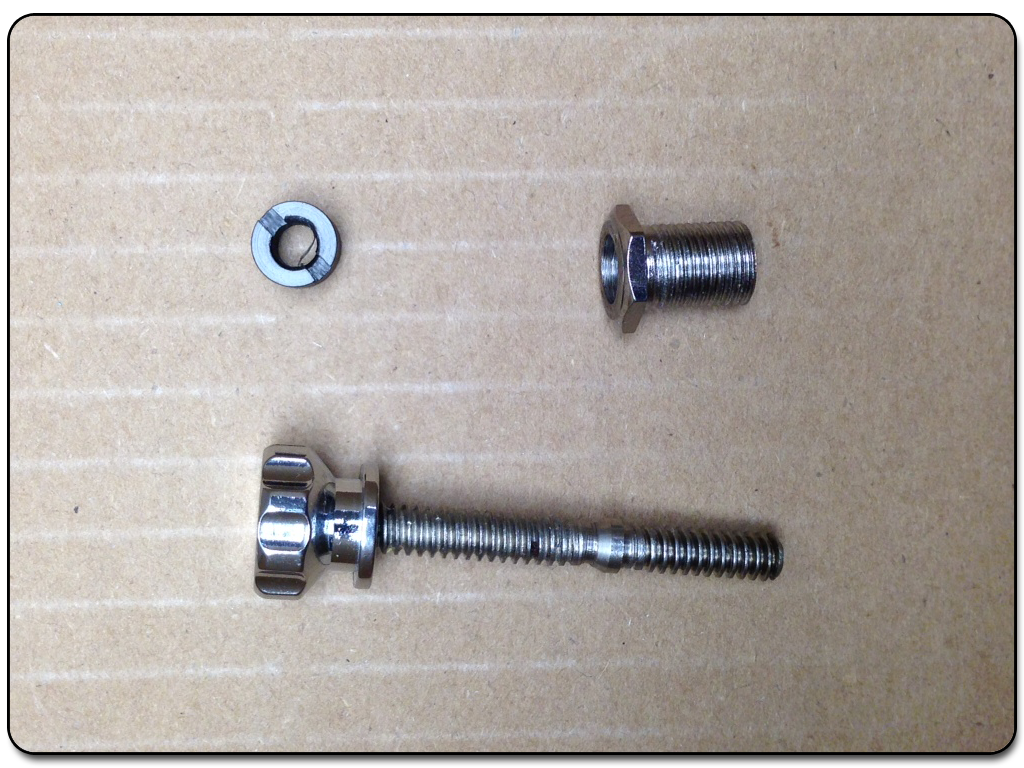
First, here is an explanation of the parts of the thumbscrew (the male half) that are inside of the neck heel.

Barrel Wrench-1

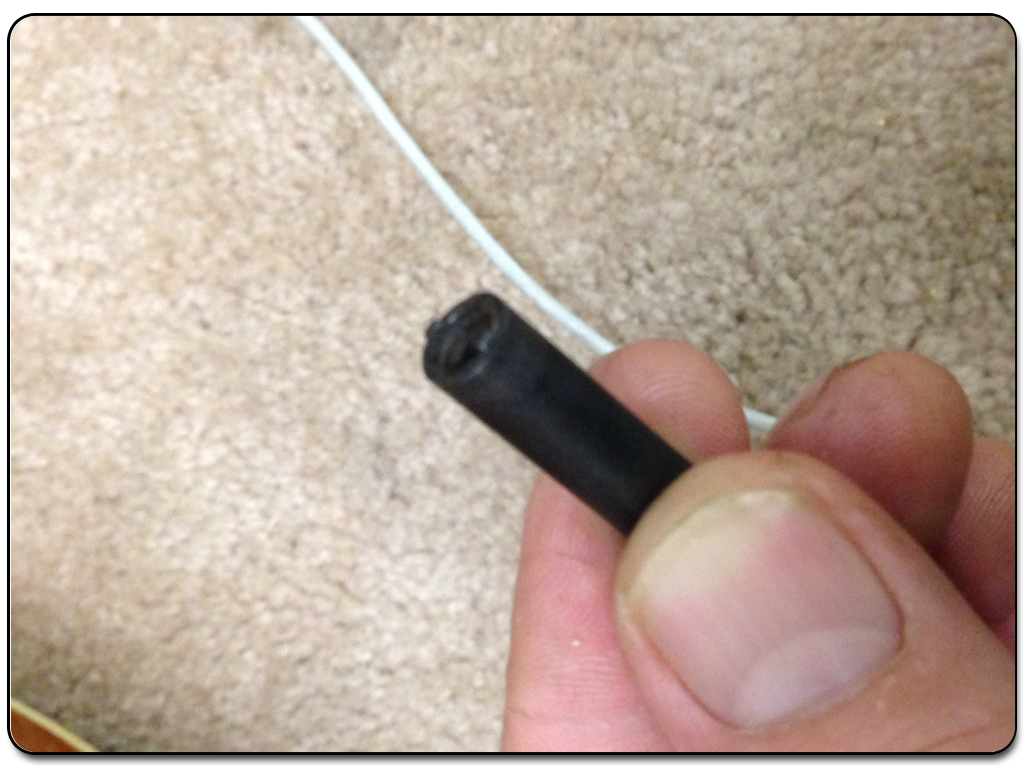
  • Thumbscrew Retainer Grommet (This is what you adjust with the barrel wrench, pictured top-left.)
  • Sleeve (pictured top-right)
  • Thumbscrew (pictured bottom)

Barrel Wrench-2

  • Now, here is an example of a thumbscrew grommet that has been shifted or shimmied into an incorrect position.
  • INCORRECT: Thumbscrew is all the way in and grommet is visible.
  • [A Visible Grommet is incorrect]

Barrel Wrench-3

  • To correct this issue.
  • Place the guitar on a solid, non-scratch surface. Make sure that the Voyage Air Guitar is in the folded position and the thumbscrew grommet is visible and accessible.

Barrel Wrench-4

  • Connect the end of the barrel wrench to the grommet protruding from the thumbscrew.
  • [Connect Barrel Wrench to Grommet]

Barrel Wrench-5

  • Rotate the thumbscrew clockwise until the grommet is no longer visible.
  • CORRECT: Thumbscrew is all the way down and the grommet is NOT visible
  • Click here for a printable pdf

Truss Rod Adjustment

How To Adjust The Neck Of Your Voyage Air Guitar With Adjustable Truss Rod

All Voyage Air Guitars are equipped with adjustable truss rods. The purpose of a truss rod is to adjust the neck to counteract string tension. The reasons for truss rod adjustments vary and this both strengthens the neck and allows for adjustments of bowed or warped necks. Common reasons for this effect are climatic changes and changing the string gauge or tuning pitch. String tension changes can affect string height, also known as the action.

To adjust the truss rod, remove truss rod cover located on the headstock.

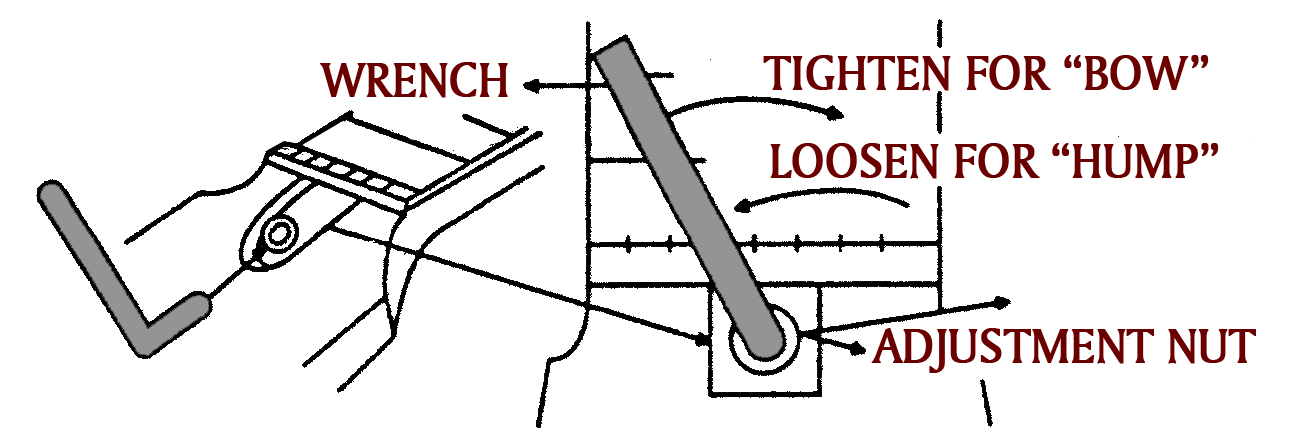
Neck BOW Neck HUMP

Sight DOWN the neck from the headstock in order to properly gauge the bow (pictured left above) or hump (pictured right above) of the neck.

Truss Road Adjustment Diagram

Insert supplied Allen wrench (size: 5/32nds). If bowed, begin tightening (clockwise) or, if the neck has a hump, begin loosening (counterclockwise) the rod. Turn very gently at small increments and continue to check the neck as you proceed with each fraction of a turn.

String height to obtain when adjusting the truss rod

Truss rod tension can also be measured by installing a capo on the first fret and holding the string at the fret where the neck joins the body. Insert a thickness gauge between the string and fret at the 8th fret. There should be about .010 clearance (app .254mm). This clearance is called “neck relief”. If there is too little neck relief, there will be fret buzzing, and too much relief can cause poor intonation and a high action. If buzzing continues after the neck is straightened, additional fret lowering or filing may be required.

Printable pdf version click here.

String Tension

In most cases, the string tension is NOT released before loosening the strap button bolt and folding a Voyage Air Guitar. To ensure your safety, pay careful attention to the correct procedure for unfolding and folding your Voyage Air Guitar. We strongly recommend that you watch the demonstration on our HOW IT WORKS page. Also, please read the instructions provided with the instrument before you unfold and fold the guitar for the first time. There is a tendency for the guitar neck to spring outwards after the bolt is loosened, and this is perfectly normal. Be aware, and be prepared for this spring effect: it’s the key to safe and proper folding/unfolding and storage of your guitar.

Related to String Tension is the relief (bow) or reverse curve (back-bow) of the guitar fingerboard. Every Voyage Air Guitar is equipped with an adjustable truss rod installed within the neck. This truss rod can be adjusted from the peghead using the wrench provided with each guitar.

For optimum playing performance, we suggest that you let the guitar acclimate to the environment (temperature and humidity) in which it will be played. (NOTE, all Voyage Air instruments are set-up and played prior to shipping. However, different climates and environmental conditions may affect the guitars playability. A second look and personal adjustment in your specific environment will insure the best performance from the instrument.)

After you’re completely satisfied with the playability of your Voyage Air Guitar, we recommend that you leave it unfolded, with the guitar neck locked in the playing position. This allows your instrument to ‘settle in.’ While in the playing position, the string tension on the neck will create the necessary relief (bow). When the neck is folded, the string tension will be released.

All Voyage Air Guitars are designed to be folded and unfolded as many times as your traveling needs require. There is no danger in folding and unfolding it constantly. However, removing tension from the neck may require some time for the neck relief to come back into the neck once in the playing position.